
The Course at Wente Vineyards: Where the Livermore Valley Shapes the Round
By Bill Irwin
October 14th, 2026
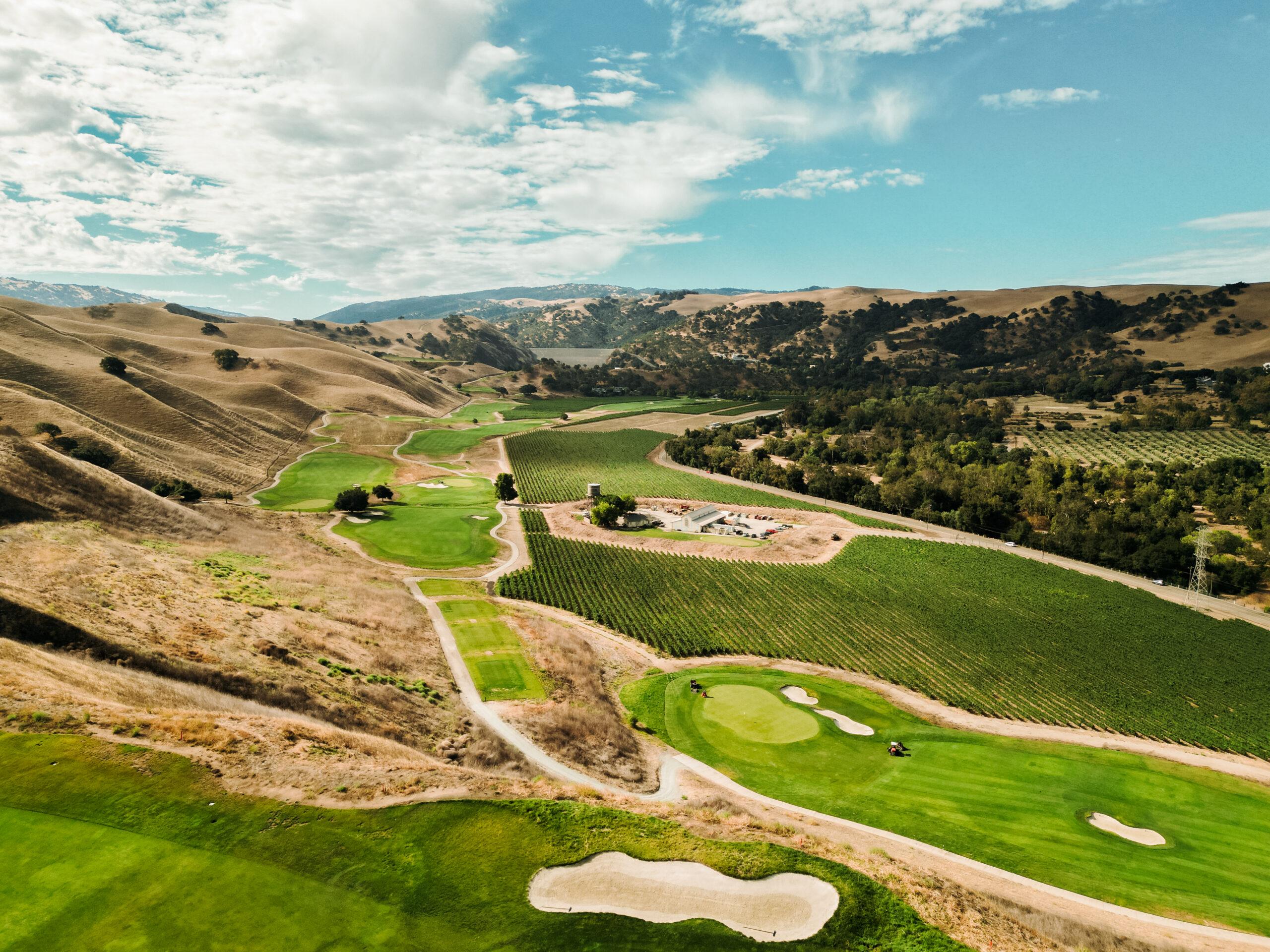
Rows of vines, sun-washed hills, a winery next door: The Course at Wente Vineyards has the makings of a postcard. Then comes the opening hole, a par 4 of 474 yards from the lofty perch of the back tees, and it’s clear this Greg Norman design in Livermore, California, is more than a scenic detour through wine country. According to course staff, when Wente hosted a Nationwide Tour event, the first hole ranked among the 10 hardest holes across all tours in each of the tournament’s three years.
That’s the useful surprise at Wente. The setting gets your attention, but the golf keeps it.
Wente sits in the Livermore Valley, one of California’s oldest wine regions, about 50 minutes east of San Francisco. The valley counts roughly 50 wineries, a lively downtown and three public courses within a short drive: Wente, Poppy Ridge Golf Course and Las Positas Golf Course. Napa and Sonoma may be better-known wine destinations, but Livermore offers a different kind of getaway, with golf and wine tasting close together and the Bay Area within reach.
Opened in 1998, Wente stretches to 7,181 yards and plays to a par 72. For a closer look at the course and a sense of a full day there, from the first tee to the tasting lounge, watch the first episode of GolfNow’s new YouTube series, The Scenic Route, embedded below. Host Schyler Horne explores the course with staff members, gets advice on playing it, and caps the day by sampling some of Wente’s wines.
A course built around the land
A round at Wente takes golfers through several distinct landscapes.
Mature oaks and sycamores shape the opening three or four holes, creating narrow corridors, with the second hole the tightest. Beyond them, the course opens into vineyards, rolling hills and views of the surrounding mountains.
Golf operations manager Mark Vanbuskirk, who has worked at the course for more than 20 years, credits Norman with making good use of the property’s existing features. The design worked around mature trees rather than removing them, preserving the character of the land while creating a varied golf course.
The vineyards are more than a backdrop. They surround many of the holes and play as out of bounds, giving wayward drives a potentially costly destination. Another of Wente’s defenses is the rough, which Vanbuskirk says “isn’t really long, but it plays really thick.”
His advice is straightforward: Keep it in the fairway.
That may sound cliché, but it was just as relevant when Wente hosted the Livermore Valley Wine Country Championship, part of the PGA Tour’s Nationwide Tour, from 2006 through 2008. In the first two years, scoring averages were 74.881 and 75.215, respectively—the highest of any Nationwide Tour event in those years.
Those numbers offer a measure of the challenge, even for touring professionals. Elevation changes complicate club selection, and wind moving through the valley adds another variable. Shots that look straightforward from the tee can play differently once golfers account for both.
Wente rewards players who pay attention to what lies ahead rather than simply choosing a target and swinging away. As Schyler Horne observes, “The course has these incredible panoramic views that make you stop and look around between shots.” It’s a fitting description of Wente, where the scenery invites you to take it all in but the golf still demands concentration. A good drive can open up the next shot; a loose one may leave a difficult recovery or bring the vineyard boundary into play.
A turn with a local twist
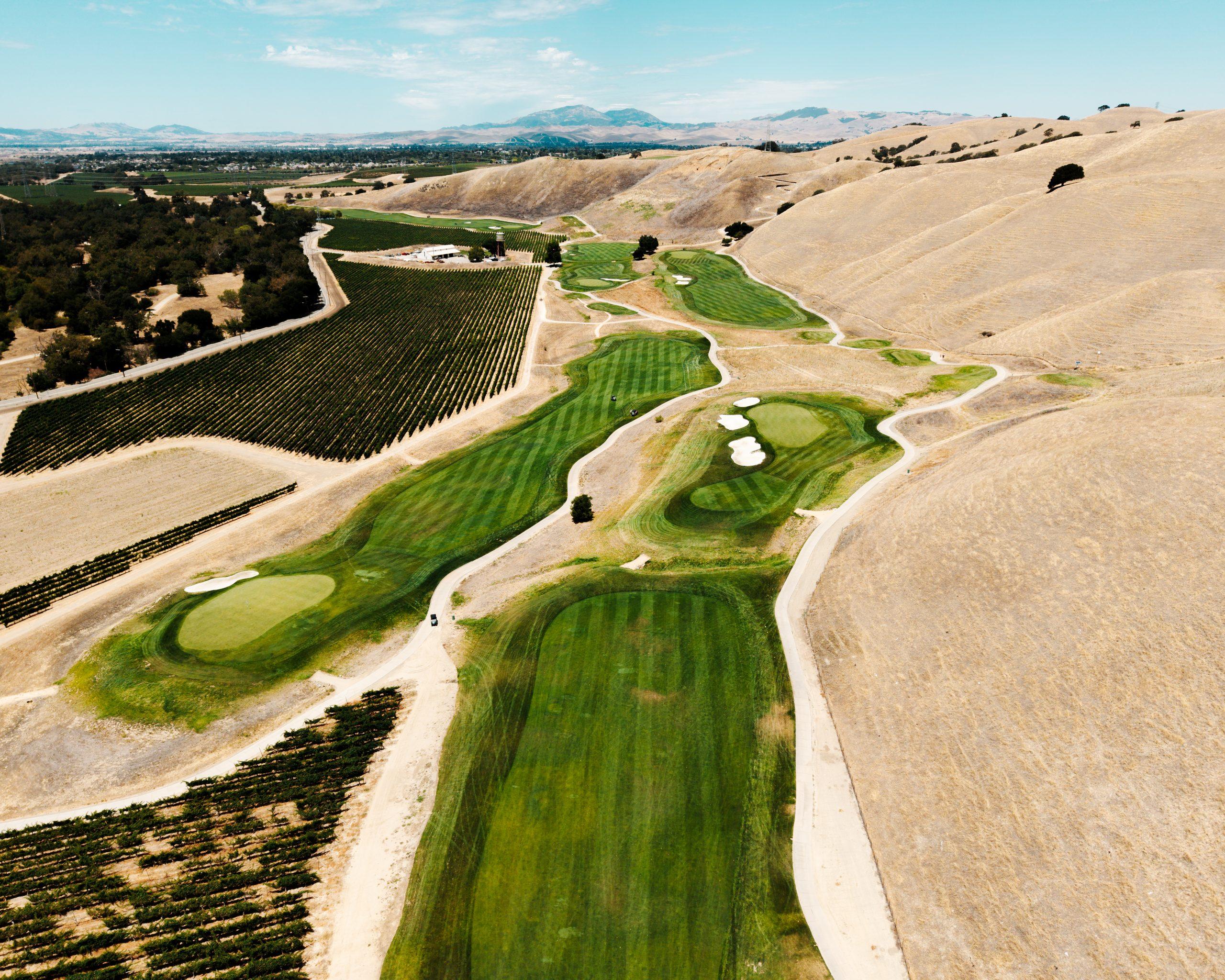
One thing that comes through clearly during a round at Wente is its sense of place. In The Scenic Route, Horne observes that you know you’re in California wine country, while the course also includes intentional nods to the nearby Bay Area. The most distinctive is Lombard Street, the winding, uphill cart path between the ninth green and 10th tee, named for San Francisco’s famous crooked street. The halfway house bears the same name.
It’s a clever local touch, but the transition also marks a change in the golf.
The ninth is a 496-yard par 4 from the back tees and the No. 1 handicap hole. After navigating Lombard Street, golfers reach the course’s No. 18 handicap hole, a much shorter par 4 measuring just 304 yards from the tips. Here the question is how aggressively to play. The answer depends on your confidence and the day’s conditions, but the contrast is immediate.
Vanbuskirk says regulars try to take advantage of scoring opportunities early on each nine, knowing the holes tend to become more demanding as they progress. It’s useful local knowledge for first-time visitors, who might otherwise underestimate how much the terrain and changing angles can influence a round.
The back nine keeps you thinking
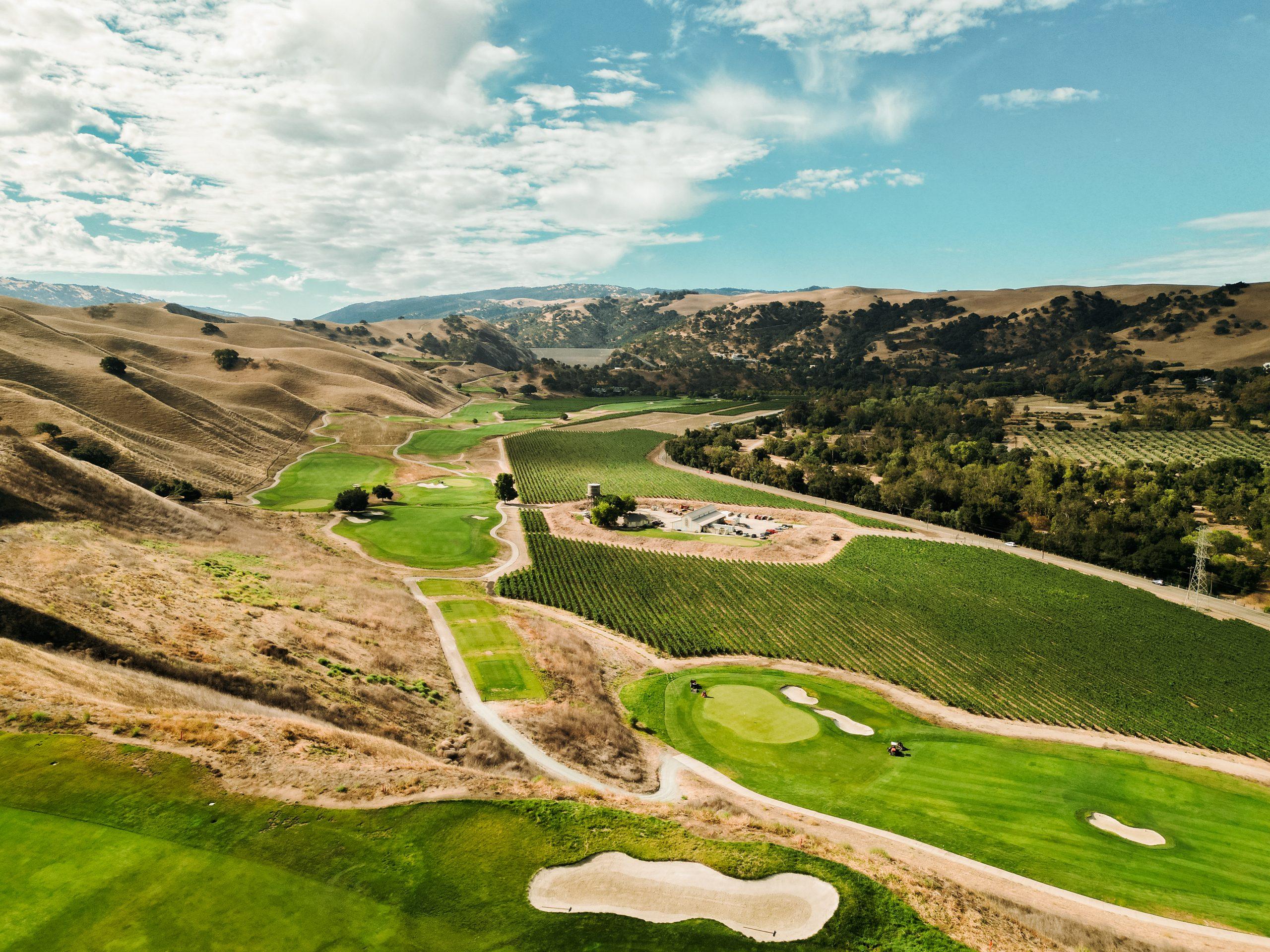
The 10th tee sits at a higher elevation, opening onto the more visually impressive half of the round. From here, Wente’s rolling hills, vineyards and mature trees frame views of Mount Diablo, Cresta Blanca ridge, and the East Bay foothills, giving the back nine a broader, more expansive feel. The scenery is striking, but the holes still demand attention.
The 12th shows Wente’s strategic side. The par 5 starts with a blind tee shot, then puts a large tree in the middle of the fairway that complicates the second. Golfers can play left or right of it or try to get past it, because a ball that finishes in the wrong spot leaves the tree blocking the third shot. The longest shot isn’t necessarily the smartest—where the ball finishes determines the approach.
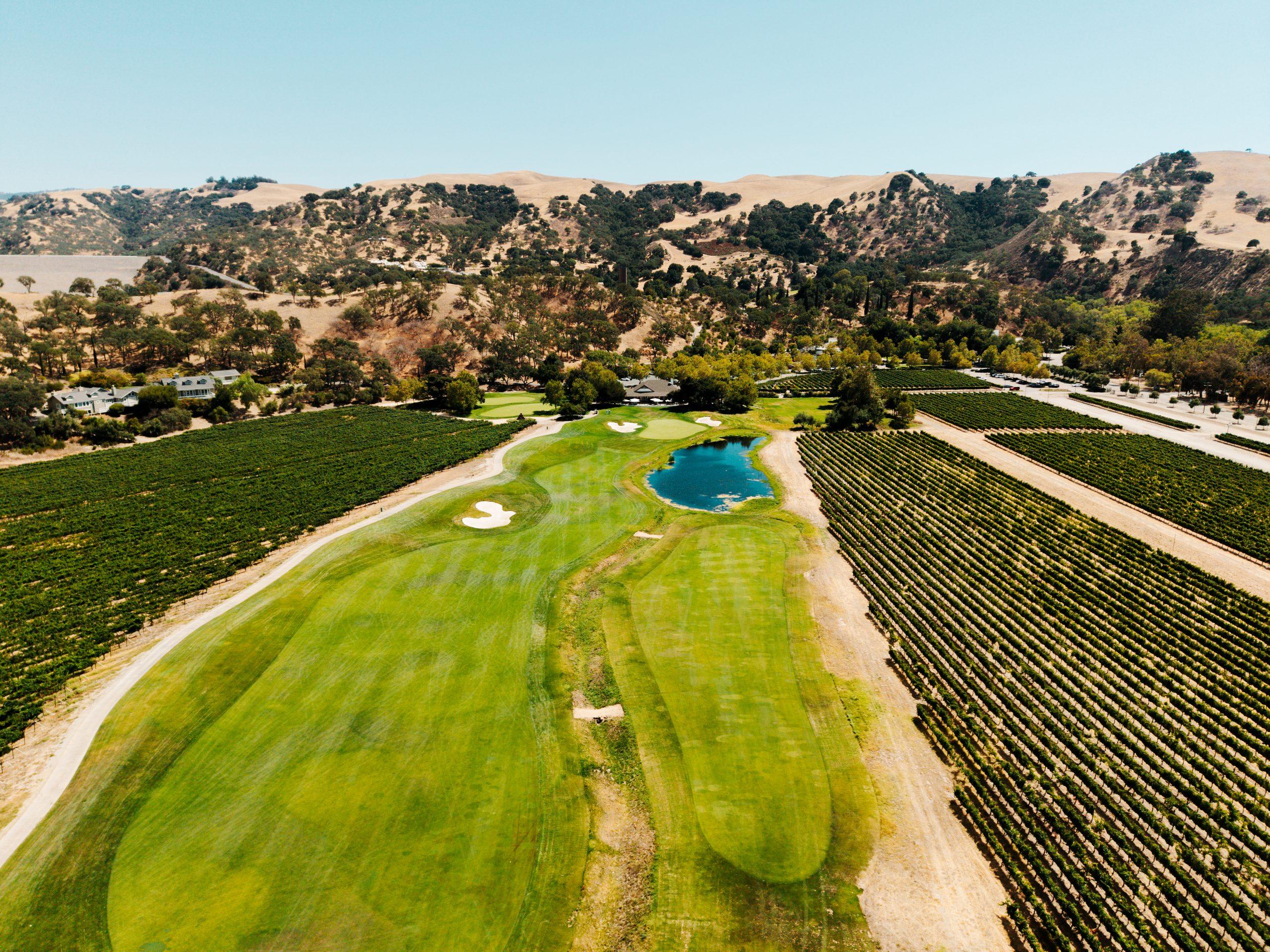
The closing holes keep the terrain in play. The par-3 14th alternates sets of tees—upper and lower—depending on the day, offering a different look at the hole, and a water tower marks the 16th fairway. The 18th is a long par 4 with a creek splitting the fairway and water guarding the green that is adjacent to the patio of The Grill at Wente Vineyards. The changing elevations and open views make this stretch particularly memorable.
Horne calls the back nine some of the most scenic golf he’s played, especially for a landlocked course, and says the course feels “shaped around the vineyards instead of dropped on top of them.” That’s a fair summary of the layout: vines, oaks, sycamores and hills are part of the routing, not just the view. Playing from the elevated tee boxes is its own thrill. As he puts it, “you can just see the ball go on forever.”
Wine country, after the round
“Golf and wine actually have a lot in common. Both take patience. Both depend on the land. And both are better when you slow down and really take in where you are.”Schyler Horne, The Scenic Route
The Wente Tasting Lounge sits across the parking lot from the course, making it easy to sample wines and nosh on small bites after sinking your last putt. The Wente family’s winemaking tradition dates to 1883, and the winery bills itself as the oldest continuously operating family-owned winery in the United States.
The lounge is more than a convenient stop. It extends the day beyond the golf course and gives visitors a chance to experience another part of the property’s identity. For a group with different interests, that combination can make Wente especially appealing: some can focus on the golf, while everyone can meet afterward to enjoy the wines and the relaxed atmosphere.
The wider Livermore wine scene offers plenty of ways to extend the visit, from nearby wineries and other public courses to downtown. Wente can anchor a day trip from the Bay Area or a weekend getaway.
Come for the vineyards, but plan on the golf—and book your round at The Course at Wente Vineyards on GolfNow.